
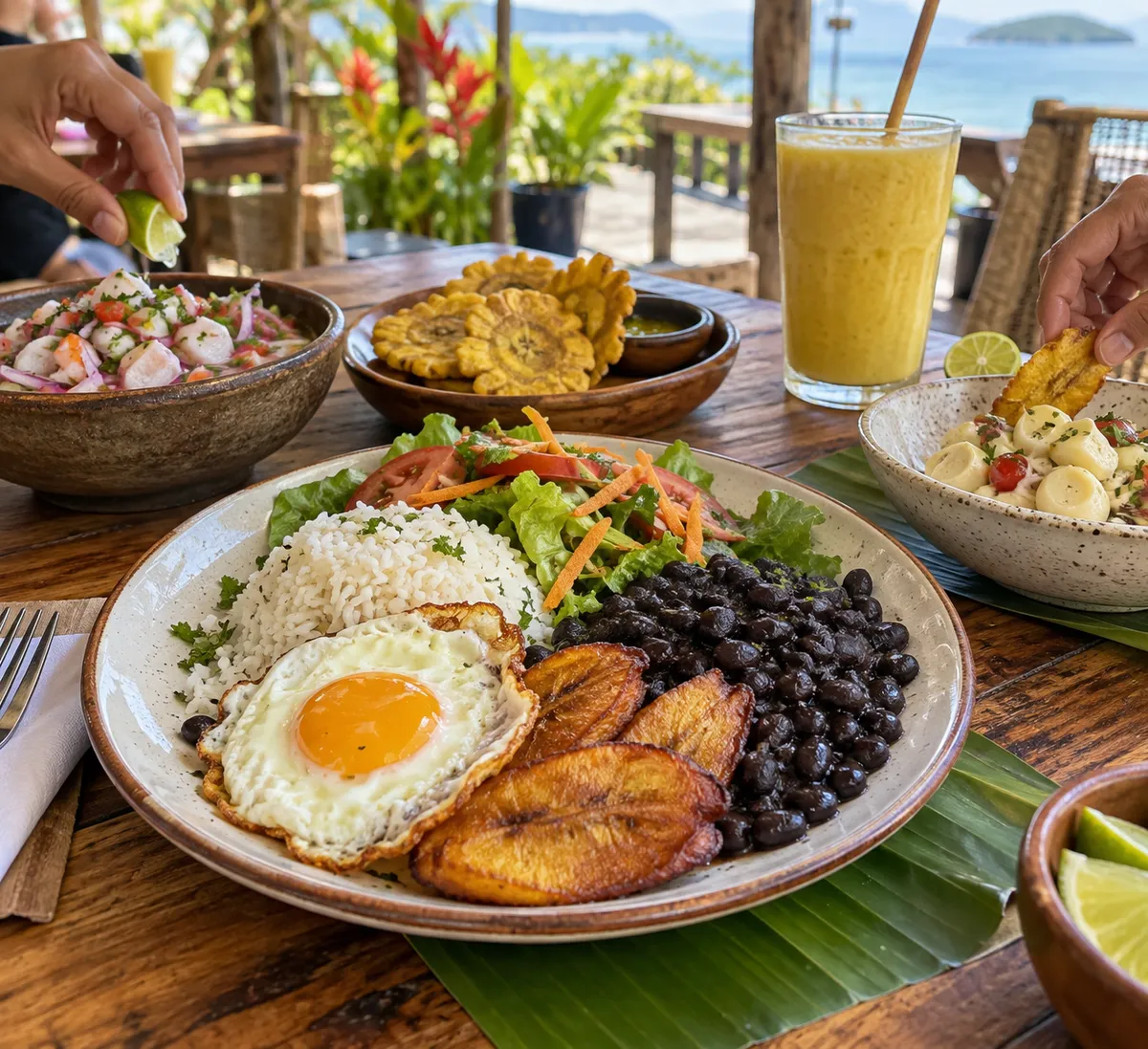
Afar's list of must-eat Costa Rican foods runs to 12 items, but the reporting we have covers seven of them in detail: ceviche, gallo pinto, patacones, heart of palm salad, batidos, rice and beans, and casado. This guide sticks to those seven. By the end, you'll know what each one is, where it fits in a day of eating, and how to cook a simple version of the most iconic one at home.
The common thread, per Afar, is that Costa Rican cooking is built on fresh local ingredients. The outlet ties that to the country's biodiversity, its regional traditions, and a farm-to-table culture. The result is food that is simple, fresh, and tied closely to place.
Start with the Everyday Plate: Casado
If you want one meal that shows you how Costa Ricans typically eat, start with a casado. It's on Afar's list, and it's a good first order because it puts several flavors on one plate rather than asking you to choose a single dish.
A casado is a classic soda order. A soda is a small, casual local eatery, and it's a good place to look for traditional plates. Ordering a casado is a low-risk way to sample the country's staples side by side.
Gallo Pinto: The Breakfast Standard
Gallo pinto is one of the dishes Afar singles out as essential. It's a rice-and-bean dish, and it's a good example of how Costa Rican cooking turns humble pantry ingredients into something people eat constantly.
Pair it with a casado at lunch or look for it at a morning meal. Either way, it's worth trying early in your trip so you have a baseline for comparison later.
Gallo pinto vs. Caribbean rice and beans
The two are easy to confuse, since both are built on rice and beans. Afar lists them separately, which signals they are distinct dishes shaped by different regional traditions. If you travel between coasts, order each one and taste the difference rather than assuming they are the same.
Ceviche: Fresh Seafood, Done Simply
Seafood is central to Afar's picture of Costa Rican eating, and ceviche is the headline example. It's a good choice when you're near the coast, where freshness is the whole point. Ask what the catch is that day and order accordingly.
Patacones: The Fried Snack
Afar's headline mentions fried snacks, and patacones are on the list. Treat them as something to share while you wait for a main dish, or as a casual bite between meals. They're an easy entry point if you're not sure what else to order.
Heart of Palm Salad: The Lighter Option
After fried food and rice and beans, a heart of palm salad gives you something fresh and lighter. It reflects the country's emphasis on local produce. Order it alongside a heavier dish to balance the table.
Batidos: Fruit in a Glass
Batidos are the fruit-packed drinks Afar highlights in its description. They suit hot afternoons and are a simple way to taste local fruit. Look for them at casual eateries and markets, and ask which fruits are in season.
A Simple Gallo Pinto to Cook at Home
This is a general home-cook approach, not a recipe from Afar. Quantities are flexible.
What you need
- 2 cups cooked rice, ideally cooked a day ahead and chilled
- 1 1/2 cups cooked beans, with a few tablespoons of their cooking liquid
- 1 small onion, finely diced
- Oil for the pan
- Salt and pepper
- Chopped cilantro, optional
Steps
- Heat a little oil in a wide skillet over medium heat.
- Cook the onion for about 3 to 4 minutes until soft.
- Add the beans and their liquid, and stir for a couple of minutes.
- Add the rice and fold everything together until evenly colored and heated through.
- Season with salt and pepper, add cilantro if you like, and serve warm.
Cold, day-old rice stays separate and fluffy instead of turning mushy, which is why it's worth planning ahead.
How to Plan Your Eating
A workable order for a first trip: gallo pinto early on, a casado at a soda, ceviche when you're by the water, patacones as a snack, a heart of palm salad to lighten things up, and a batido whenever you need to cool off. Along the way, taste rice and beans from the Caribbean side against gallo pinto to see how regional tradition changes a simple idea.
One caution: this guide covers seven dishes from a longer list, so treat it as a starting point rather than the full picture. Ask locals what's good where you are.
Your next step is simple: pick one dish from this list, order it the first chance you get, and ask the cook what makes their version theirs.