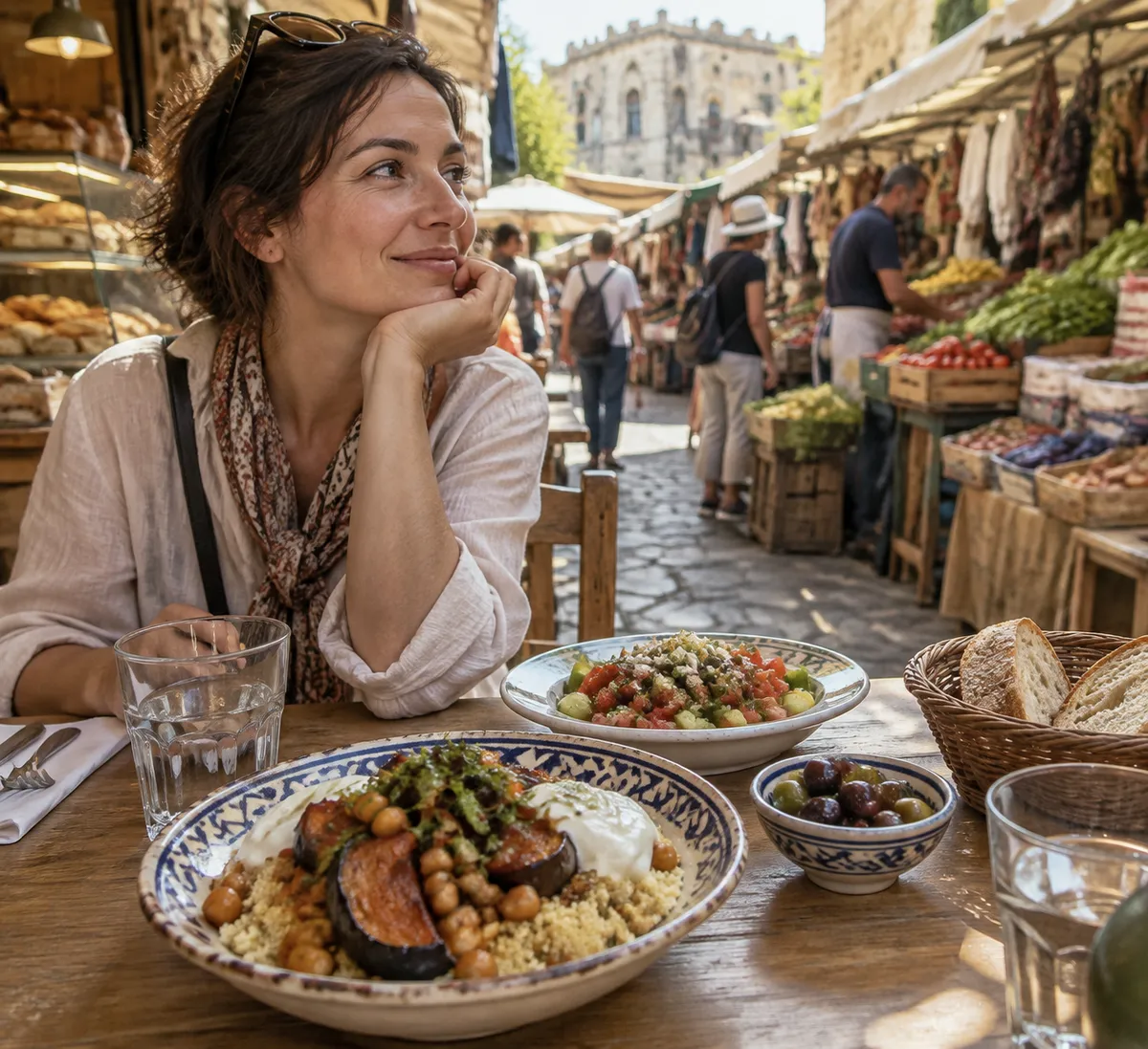
Planning a trip around food is not about cramming in reservations. It is about deciding what you most want to taste, then letting the rest of the day bend around it. Real Simple recently laid out nine tricks for doing exactly that, and they hold up as a simple framework. Here is how to put them to work, in the order you will actually use them, with one goal: plenty of great meals and a schedule that still breathes.
Before You Go: Do the Groundwork
1. Research local specialties
Start with a short list of what the place is known for. Look for the regional dish, the local bread, the street snack, the drink people order with it. Even five items give you a lens for reading menus and market stalls once you arrive.
A practical way to do it: write one line per item, with the name, what it is, and whether it is a breakfast, snack, or dinner food. That tells you where it fits in a day.
2. Build the itinerary around standout meals
Pick one or two meals you refuse to miss and anchor your days to them. Plan sights near those meals rather than the other way around. If dinner is across town, you already know where your afternoon goes.
This is the secret to not overscheduling: two anchors a day at most, and everything else stays flexible.
3. Book key restaurants in advance
Reserve only the places that matter most, especially ones likely to fill up. Treat these as fixed points. Everything else can stay open.
On the Ground: Eat Where the Place Actually Eats
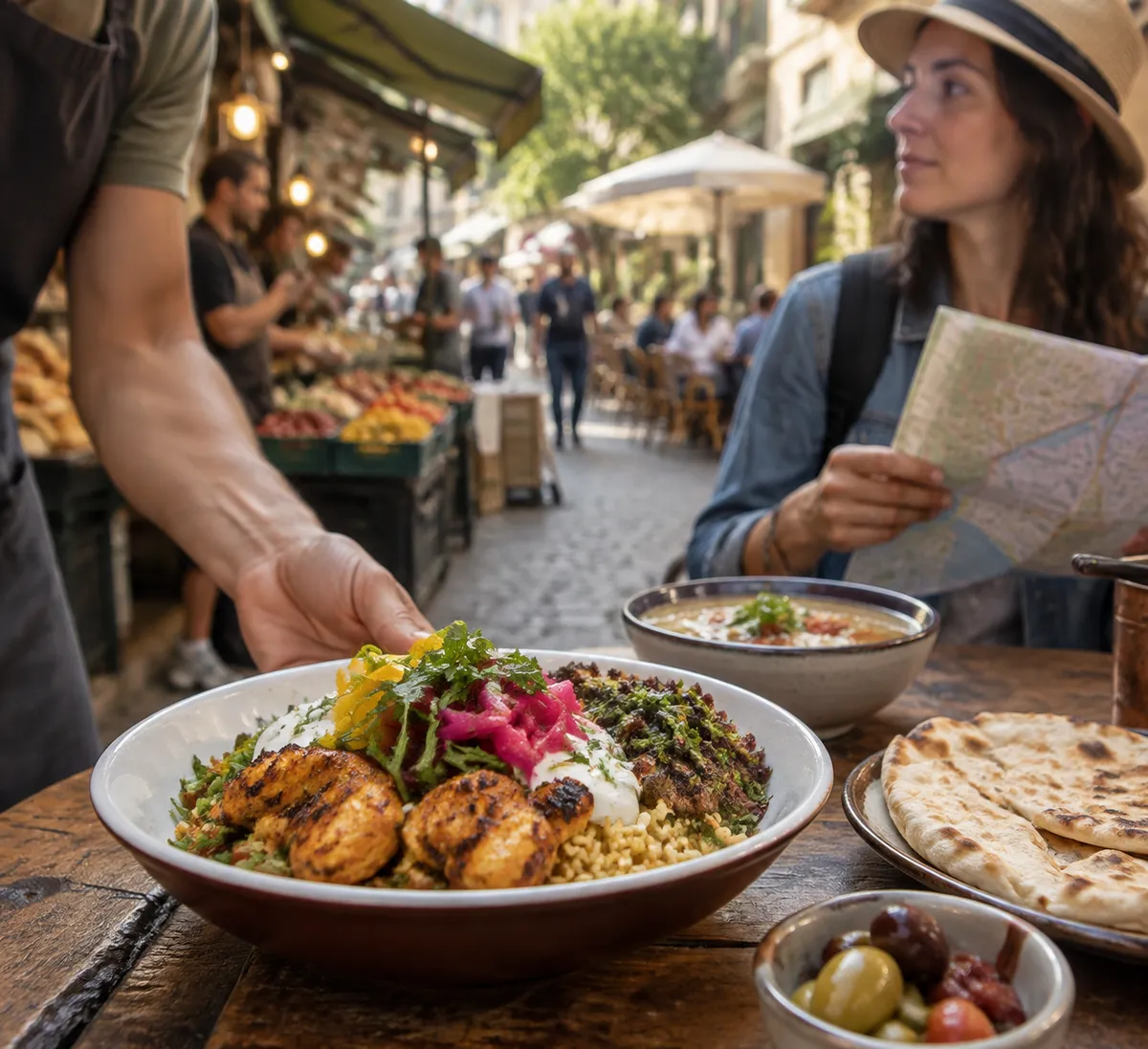
4. Ask locals where they actually eat
The phrasing matters. Instead of asking for the best restaurant, ask where they eat on a regular weeknight, or where they would take a relative. Hotel staff, shop owners, and your taxi driver are all fair game. Ask what to order, too, not just where to go.
5. Visit markets, bakeries, and food halls
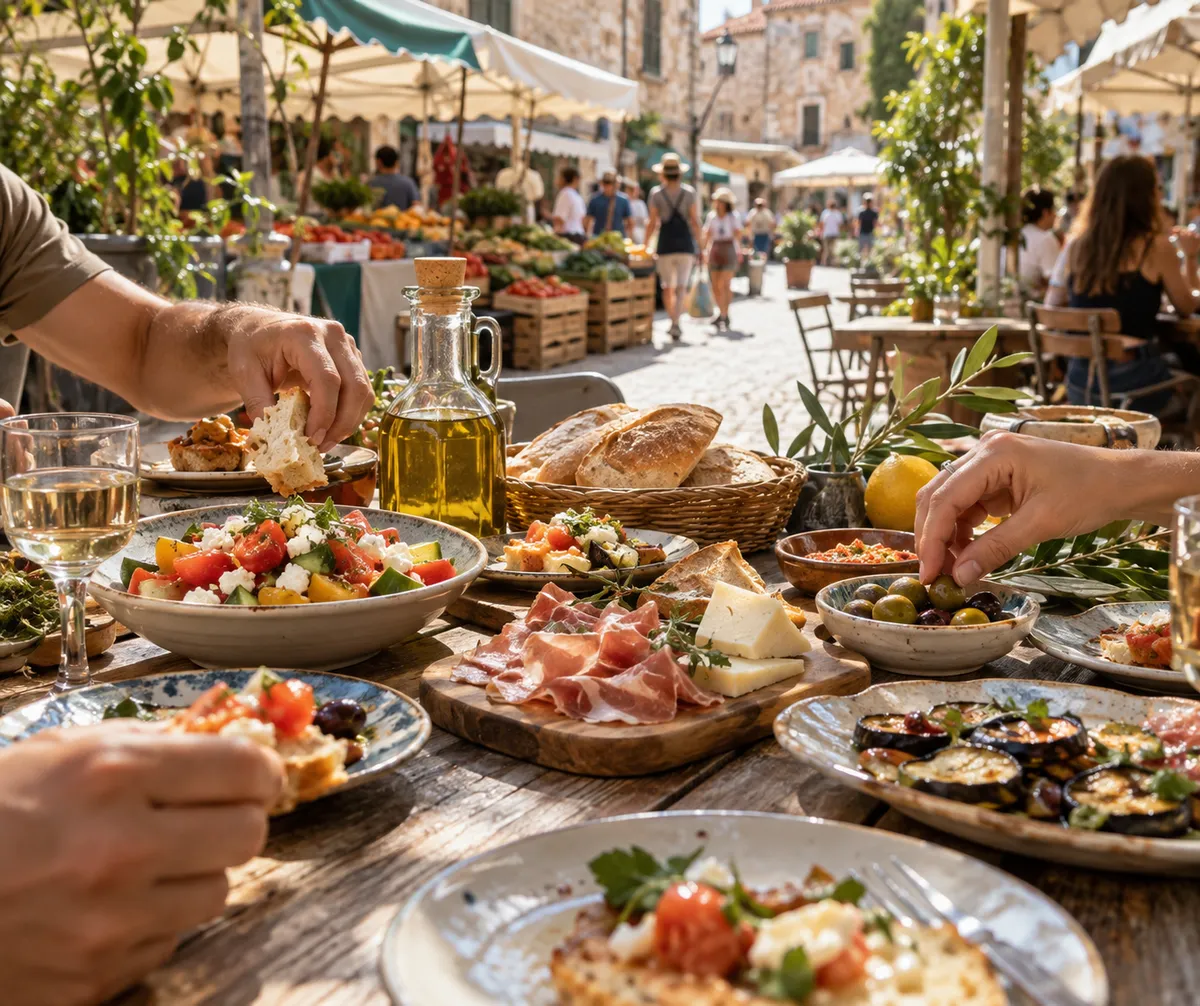
These are the easiest places to taste a lot of local food cheaply and without commitment. A market gives you a view of seasonal ingredients and regional habits. A bakery shows you what people eat at breakfast. A food hall lets a group of people with different tastes all get what they want.
Go with an empty stomach, buy small portions, and make a lap before you spend anything. Sample the thing that looks busiest.
6. Leave room for spontaneous finds
Schedule gaps on purpose. An unplanned afternoon is where you stumble onto a line of locals outside a tiny counter or a stall selling something you could not have researched. If every hour is booked, you will walk past these.
A good rule: keep at least one meal a day unplanned.
Go Deeper: Learn the Food, Not Just Eat It
7. Take a food tour or cooking class
Early in a trip, a food tour can orient you, showing you neighborhoods and teaching you what to look for. A cooking class lets you go home with a skill. Either one gives context to what you eat afterward, which makes later meals more interesting.
Make It Last
8. Shop for edible souvenirs
Food souvenirs stretch the trip into your kitchen at home. Good candidates include spices, preserved goods, sweets, and regional pantry staples. Before you buy, check what your airline and your home country allow you to bring back, since rules on food items vary.
9. Document meals as part of the trip memory
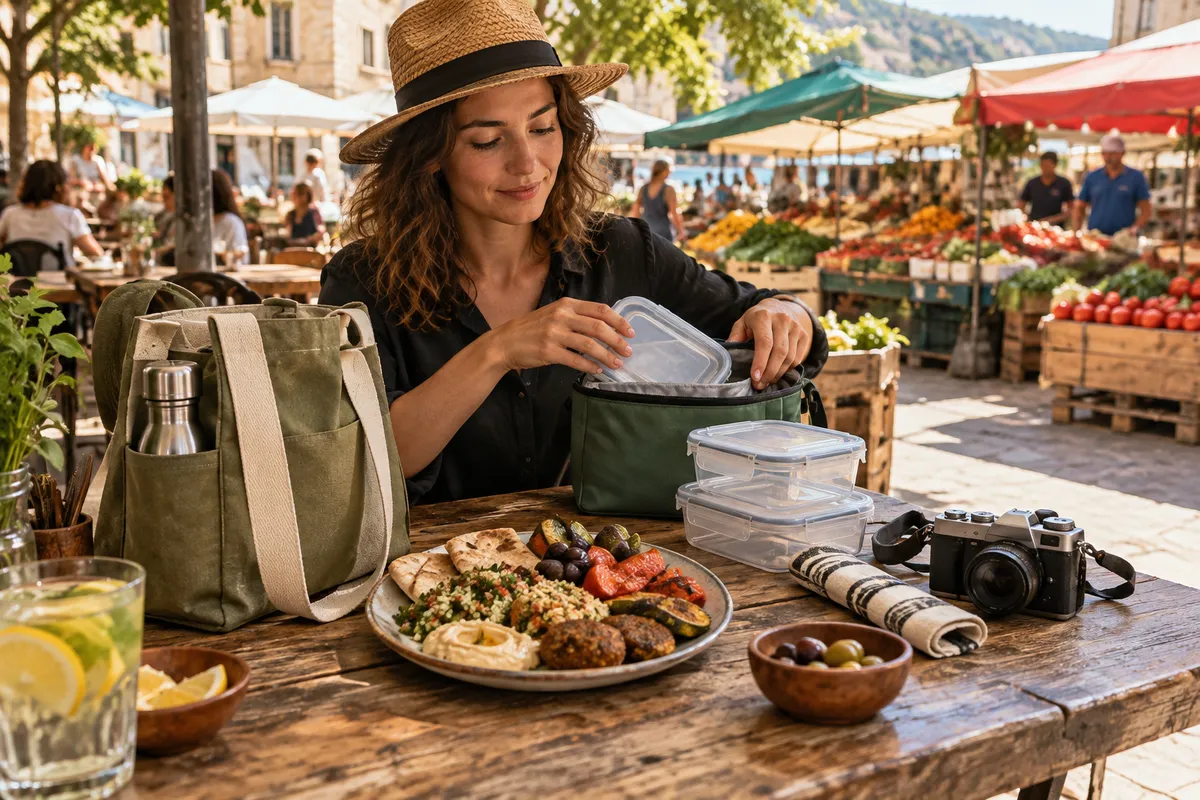
Snap the dish, but also jot down the name, the place, and one line about what made it good. Photos fade into a blur of plates; a short note lets you find that place again or recreate the dish. A simple running list in your phone does the job.
A Simple Home Version: Tomato Bread Toast
You can practice the food-first mindset before you leave. Plenty of regions pair great bread with ripe tomato and good oil, and the idea needs no special skill.
- Toast thick slices of crusty bread until golden.
- Halve a very ripe tomato and rub the cut side over the warm toast so the pulp soaks in.
- Drizzle with olive oil and add a pinch of salt.
The point is the lesson it teaches: simple food depends on good ingredients, which is exactly what markets and bakeries help you find while traveling.
A Sample Food-First Day
Here is how the nine tricks fit together in practice:
- Morning: Bakery stop for breakfast, picked because a local suggested it.
- Midday: Market lap, small tastes, and a snack instead of a sit-down lunch.
- Afternoon: Open time. Wander, and follow your nose.
- Evening: The reserved anchor dinner, built around a regional specialty you researched.
That is one fixed point, several flexible ones, and room to change your mind.
The Takeaway
Before your next trip, write down the two meals you most want to eat, book them, and leave everything else loose. That is enough structure to make food the highlight and enough freedom to find something better.