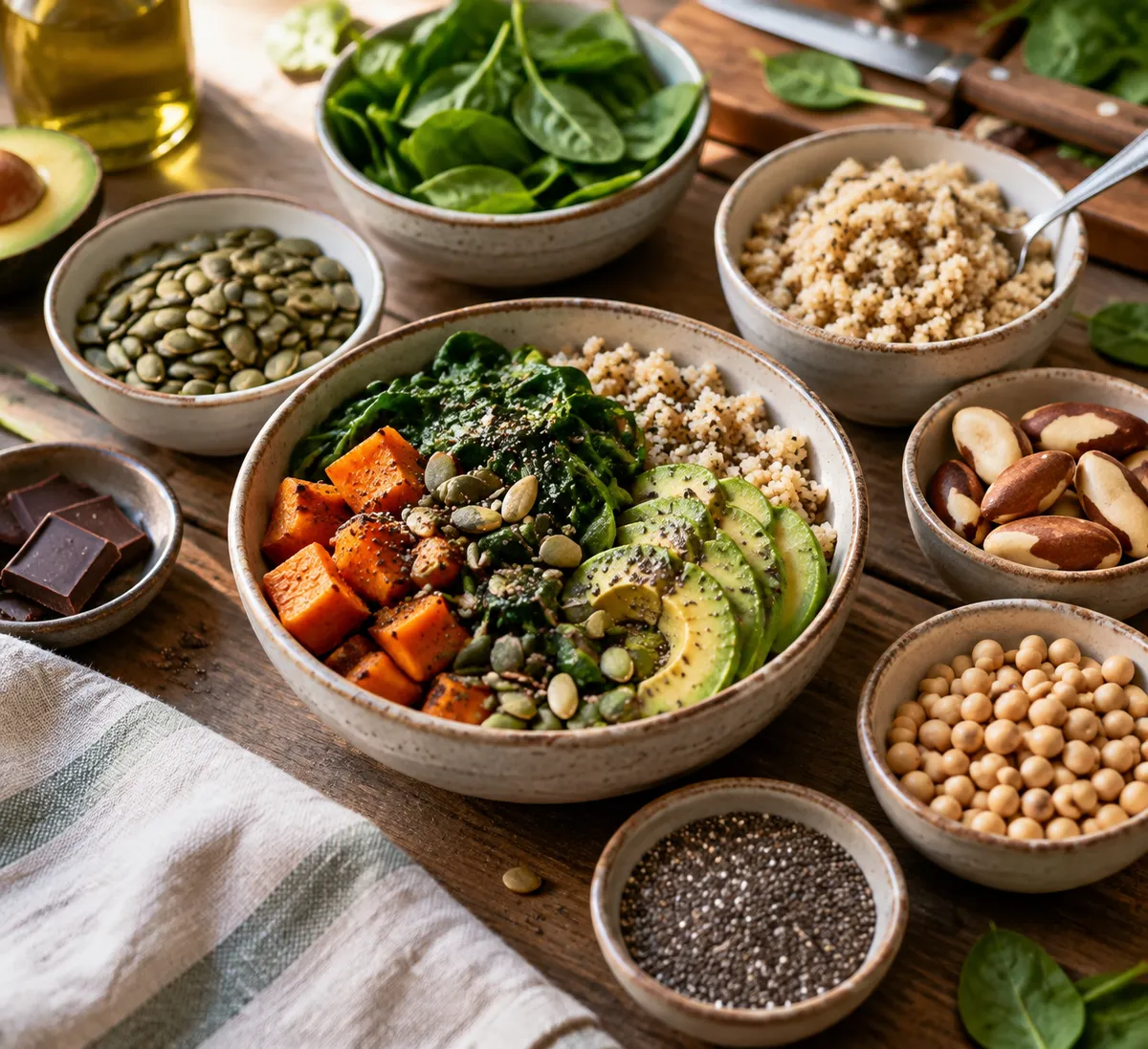
Dark chocolate gets most of the credit when people talk about magnesium. It is a good source, but it isn't the richest one. Per Health, six everyday foods contain more magnesium than dark chocolate: pumpkin seeds, spinach, amaranth, Brazil nuts, chia, and soybeans.
This guide takes a kitchen-first approach. For each food, you'll get a practical way to use it, with a few nods to the regional traditions where these ingredients have long histories. Keep the chocolate. Just give it some company.
Why Look Beyond Chocolate?
Magnesium is a popular wellness topic, often linked in conversation to sleep, stress, and muscle recovery. Health's piece positions these six foods as stronger options for boosting intake, and notes they are nutrient-dense staples: seeds, greens, grains, nuts, and legumes.
That range is the useful part. You don't need a supplement aisle or a new routine. You need a few ingredients you can fold into meals you already make.
1. Pumpkin Seeds
Pumpkin seeds are the easiest swap on the list because they need no cooking at all.
- Scatter them over salads, soups, and yogurt.
- Toast them in a dry pan for a couple of minutes until they pop, then salt lightly.
- Blend them into a green sauce with herbs, garlic, and lime. Pumpkin seeds are central to many Mexican dishes, including pipián-style sauces, so this is a natural fit for tacos or roasted vegetables.
2. Spinach
Spinach is the simplest way to get greens into a meal without much effort.
- Wilt a big handful into eggs, lentil soup, or pasta right at the end.
- Sauté it with garlic and olive oil, the way many Mediterranean kitchens do, and finish with lemon.
- Blend it into a smoothie, where the flavor mostly disappears.
Raw spinach shrinks dramatically when cooked, so a bag that looks huge becomes a single serving.
3. Amaranth
Amaranth is a tiny grain with a long history in Mexican and Andean food traditions. It's less familiar to many home cooks, so here is an approachable way in.
- Simmer it like porridge with water or milk, then top with fruit and cinnamon.
- Cook it thick and chill it into squares, then pan-fry for a crisp side.
- Stir a spoonful into soups as a thickener.
It cooks into a soft, slightly sticky texture, so expect something closer to porridge than fluffy rice.
4. Brazil Nuts
Brazil nuts are rich and substantial, so a few go a long way.
- Chop them into oatmeal or grain bowls.
- Grind them with a little salt and sprinkle over roasted vegetables.
- Pair a small handful with fruit for a simple snack.
5. Chia
Chia is the pantry staple that asks the least of you.
Quick chia pudding
- Stir 3 tablespoons of chia seeds into 1 cup of milk (dairy or plant-based).
- Add a little honey or maple syrup and a splash of vanilla.
- Refrigerate at least 2 hours, or overnight.
- Top with fruit and toasted pumpkin seeds, which doubles up on two foods from this list.
You can also stir a spoonful into oatmeal, smoothies, or jam.
6. Soybeans
Soybeans are the legume on the list, and they are easy to find in several forms.
- Boil edamame in salted water for a few minutes and eat them as a snack, as is common in Japanese izakaya-style dining.
- Add shelled soybeans to fried rice, salads, or grain bowls.
- Cook them into soups and stews alongside greens.
A Simple Magnesium-Rich Day
You can use all six without overhauling anything:
- Breakfast: Amaranth porridge or chia pudding with a few chopped Brazil nuts.
- Lunch: Spinach salad with edamame and toasted pumpkin seeds.
- Dinner: Garlicky sautéed spinach alongside whatever you're already cooking, finished with a pumpkin seed sauce.
- Snack: Dark chocolate, since it still counts.
The Takeaway
Dark chocolate is a fine source of magnesium, but it's not the top one. This week, pick two items from the list and add them to meals you already cook: toast a handful of pumpkin seeds for your salad and make one jar of chia pudding. Small habits stick better than big plans.